QA/QC & Deviation Reports in Dubai and UAE
QA/QC & Deviation Reports
We provide scan-based QA/QC and deviation reporting in Dubai and across the UAE, using point clouds to verify what was built against design intent. Instead of spot checks, you get measurable, full-surface analysis for floors, slabs, walls, columns, and façades—ideal for handover, contractor verification, and technical decision-making.
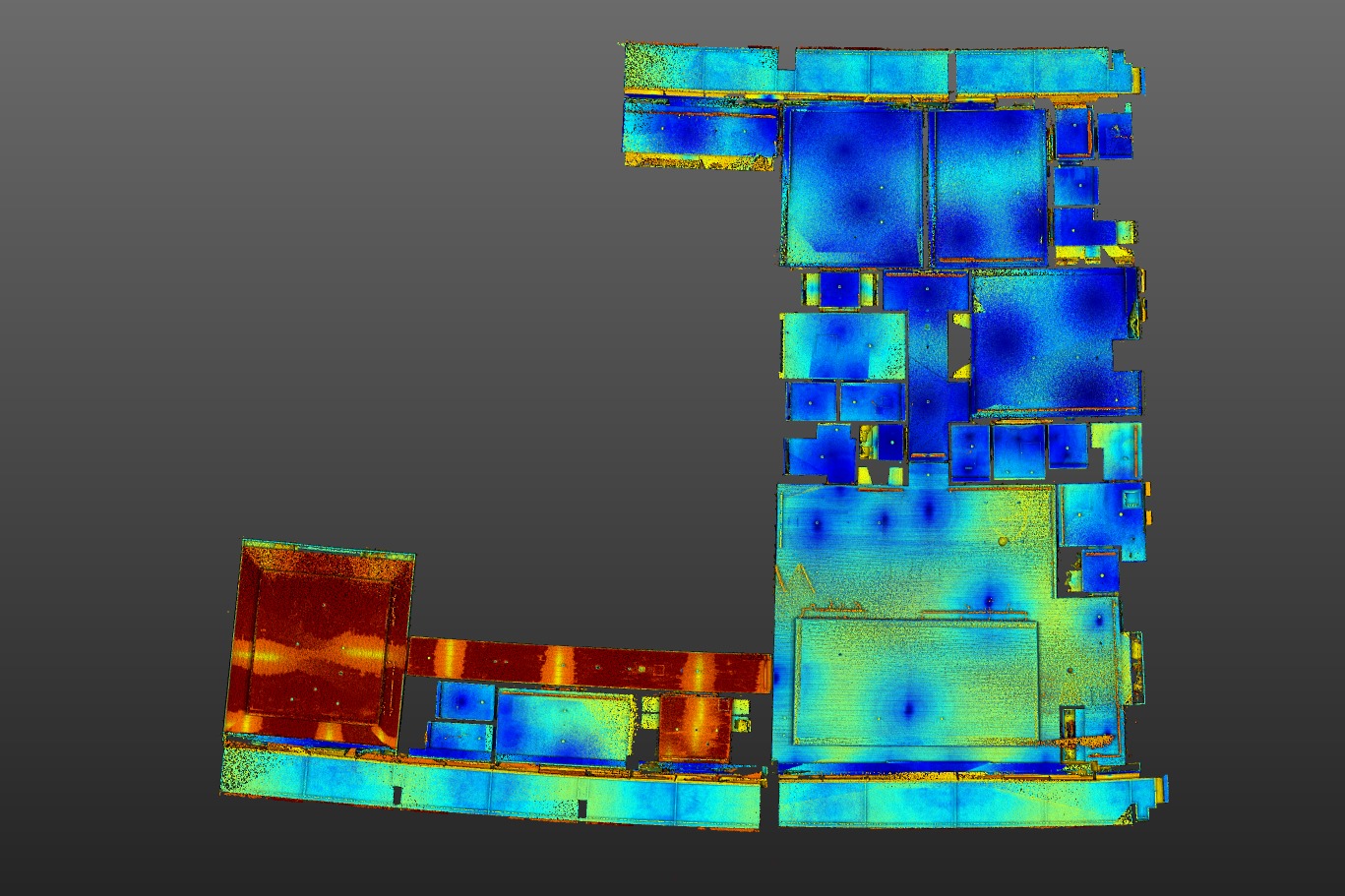
Deviation Heatmaps
We generate color-coded deviation heatmaps from laser scanning data to show exactly where surfaces are out of tolerance. Heatmaps make it easy to understand issues at a glance—no guessing, no “maybe it’s off.”
These maps are widely used in Dubai fit-out and construction projects to validate floors, ceilings, and wall lines before finishes, joinery, or cladding goes in. They help prioritize corrective work and avoid expensive rework.
Deliverables typically include annotated heatmaps, reference datums, and clear notes so consultants, contractors, and client teams can act immediately.
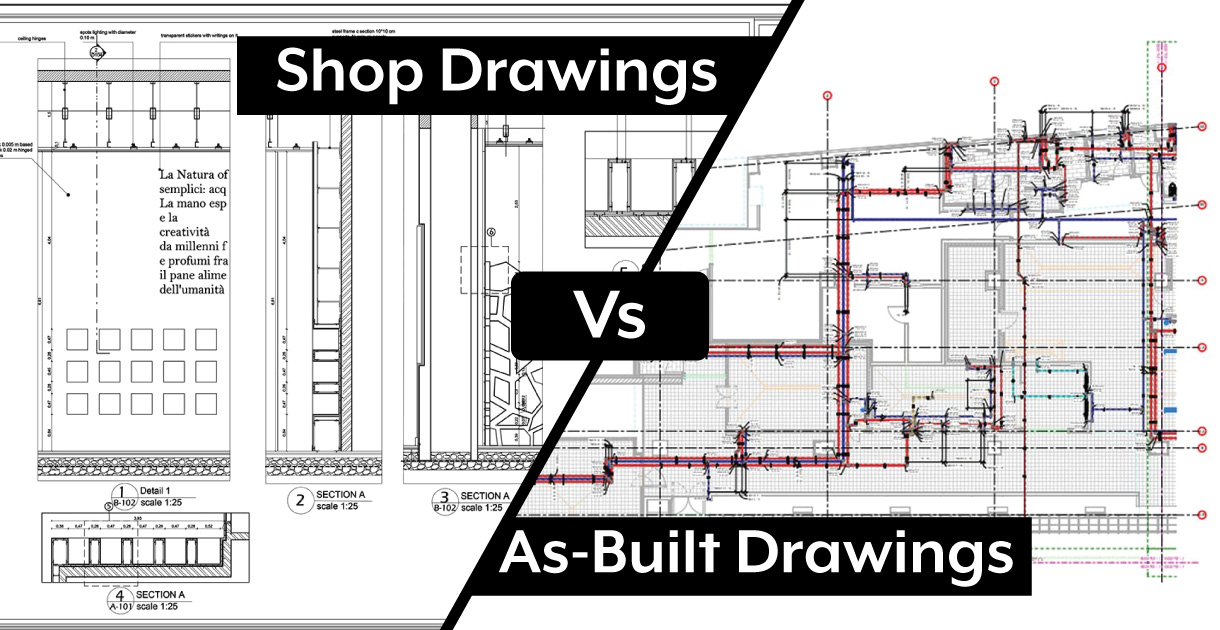
Design vs As-Built
We compare your BIM/CAD design against the as-built point cloud to confirm alignment, clearances, and installation feasibility. This is essential for renovation, retrofit, and coordination-heavy projects in the UAE where drawings often drift from site reality.
The output highlights clashes and mismatches early—before fabrication, before ceiling closure, and before final approvals. It reduces RFIs and prevents late changes driven by hidden deviations.
You receive a structured report with visual overlays and measurable deltas, ready for coordination meetings and contractor actions.
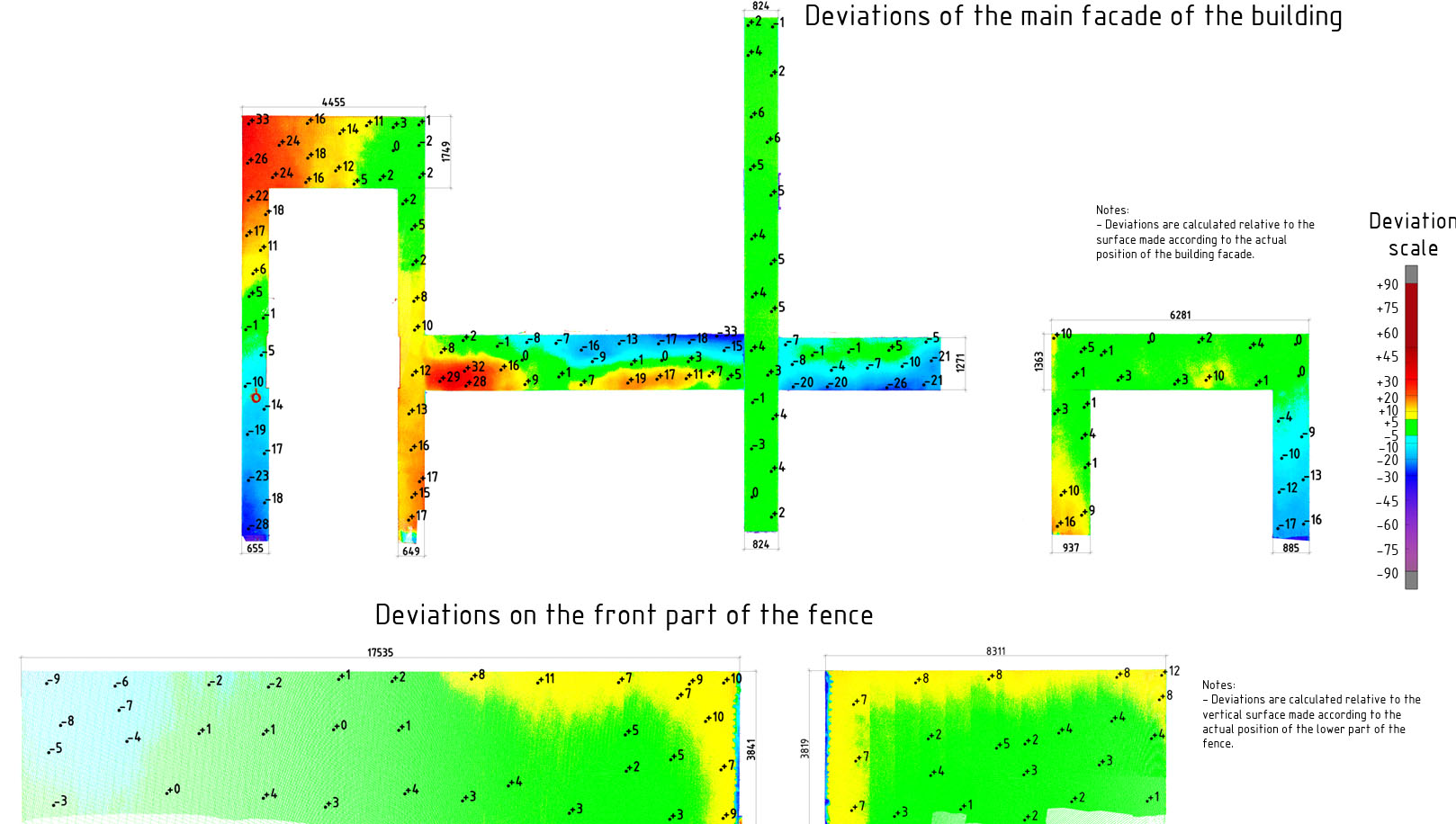
Flatness Checks
We assess floor and slab flatness using laser scan data to find highs, lows, waves, and uneven areas over large surfaces. Flatness checks are critical for tile, stone, parquet, resin flooring, and any finish that reveals imperfections.
In Dubai projects, flatness verification helps avoid disputes between trades and prevents failures in finish installation. It’s also useful before furniture and joinery installation where level references matter.
We deliver clear flatness maps and measurements tied to chosen datums, with notes that support corrective grinding, leveling, or rework planning.
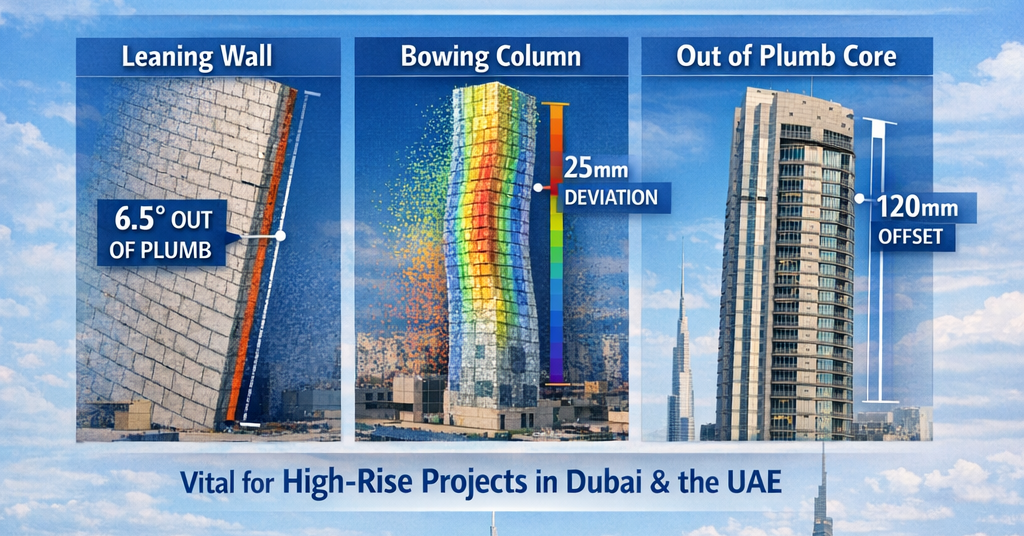
Verticality Checks
We evaluate verticality (plumbness) of walls, columns, cores, and façade elements using scan-to-point-cloud analysis. This identifies leaning, bowing, and out-of-plumb conditions that can break façade alignment or interior fit-out lines.
Verticality checks are especially valuable for high-rise work in Dubai and the UAE, where access is difficult and minor drift becomes major over height. It supports both structural verification and façade/fit-out coordination.
Deliverables include deviation visuals and measurable offsets so teams can plan corrections or adjust details without surprises.
Tolerance Reports
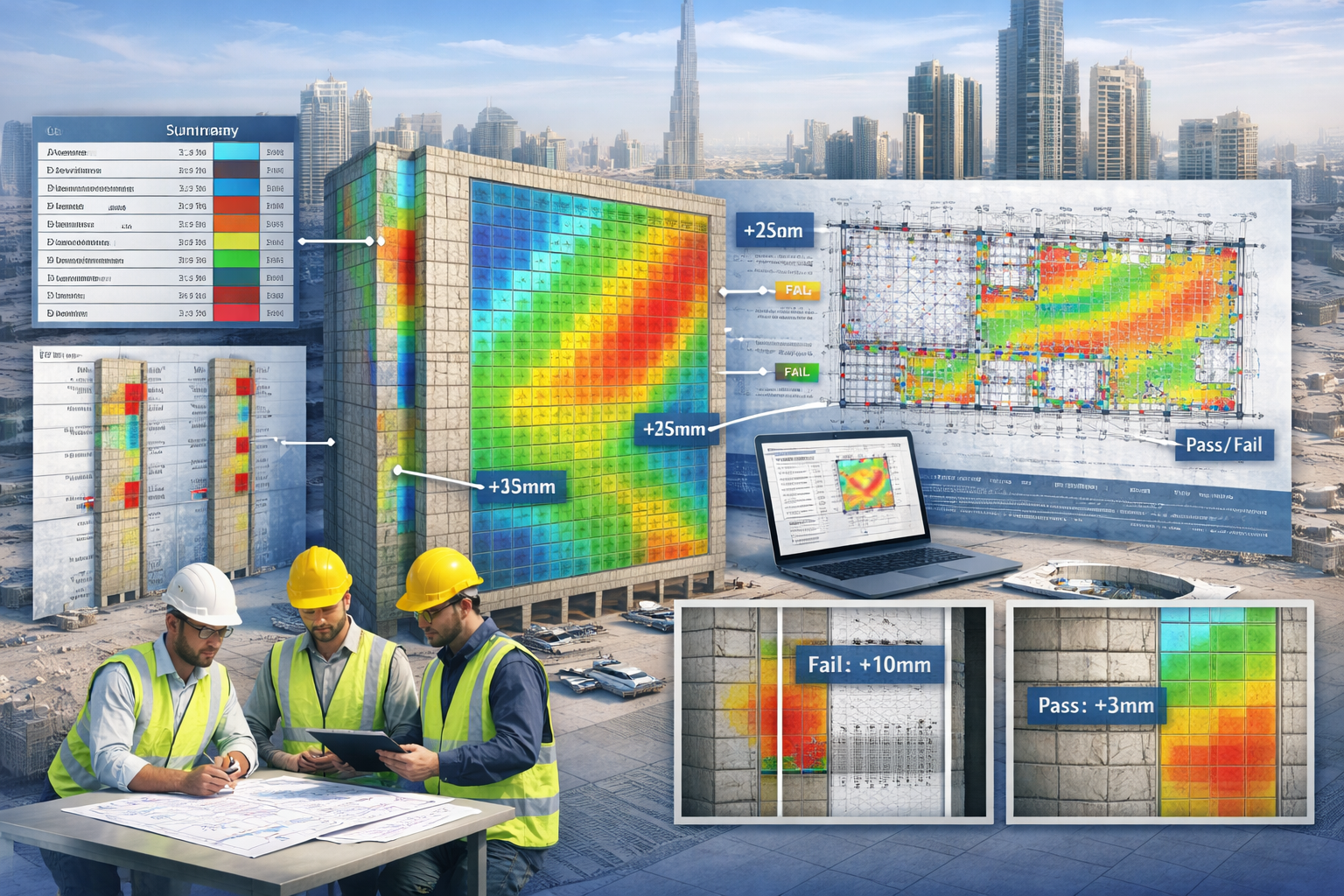
We produce tolerance reports tailored to your project requirements, showing pass/fail zones and quantified deviations. This can be aligned to your consultant’s specs, method statements, or acceptance criteria for handover.
Tolerance reporting in the UAE is commonly used for QA/QC sign-off, contractor verification, and pre-handover documentation. It helps keep decisions objective and traceable.
Reports typically include summary tables, annotated views, and supporting visuals so stakeholders can approve, correct, or accept with clarity.
Deformation Monitoring
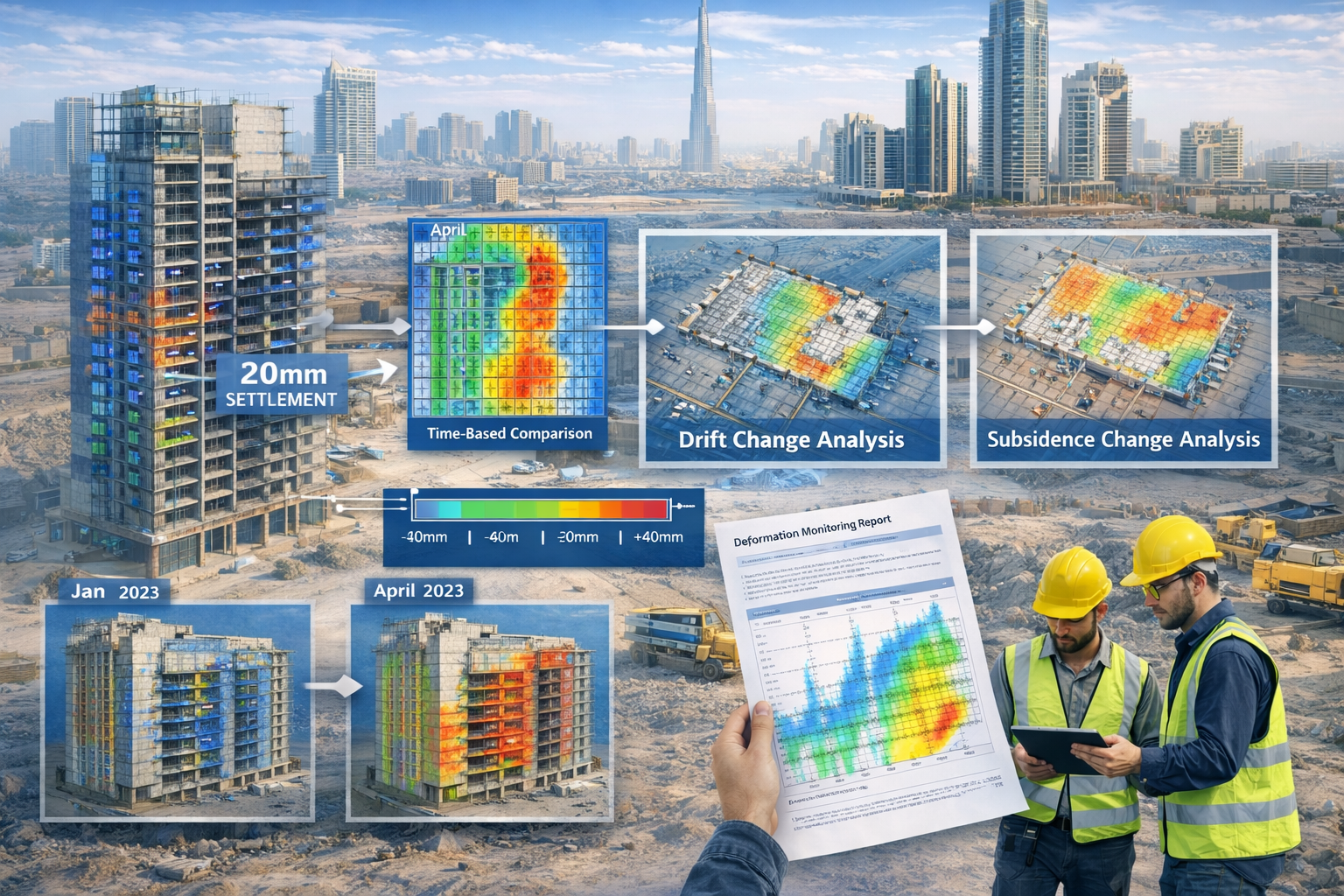
We provide deformation monitoring by repeating scans over time and comparing datasets to detect movement, settlement, or progressive drift. This is useful for façades, structural elements, slabs, and sensitive areas during construction or refurbishment.
In Dubai projects, monitoring supports risk management on challenging sites—especially where loads change, demolition occurs, or adjacent works may impact stability. It gives early warning before small movement becomes a major issue.
You receive time-based comparison outputs, change maps, and a clear narrative report to support engineering decisions and site actions.